
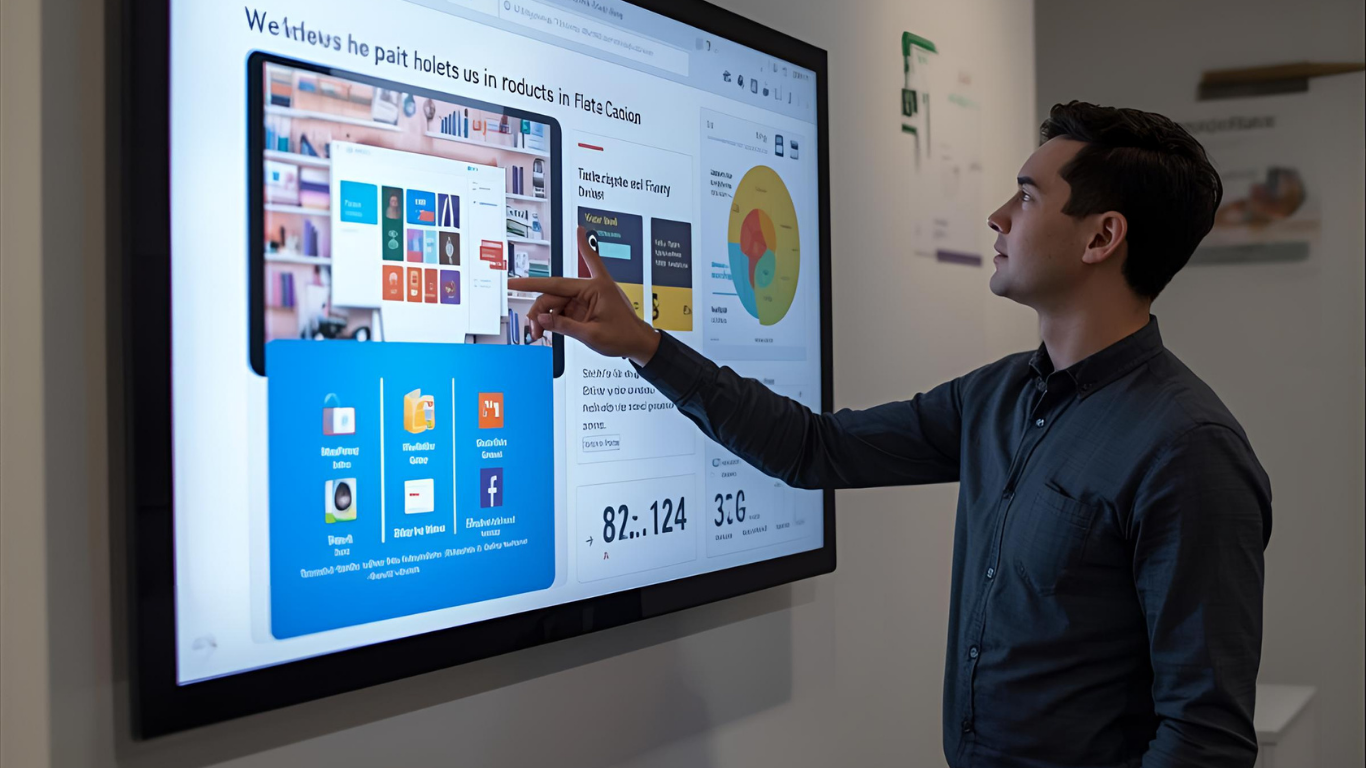
The Role of Interactive Flat Panels in Digital Education
Interactive flat panels (IFPs) are one of the key technologies driving the rapid evolution of digital education. These contemporary resources enhance student engagement in the classroom, streamline instruction, and increase accessibility and interactivity for learners of all ages.
What Are Interactive Flat Panels?
Advanced touchscreen displays made specifically for classrooms are called interactive flat panels. Through writing, drawing, annotation, and multimedia presentations, they enable educators and learners to engage with digital content. These panels provide seamless device integration, built-in apps, and cloud connectivity in contrast to conventional whiteboards.
Key Features of Interactive Flat Panels
· High-resolution 4K display
· Wireless screen sharing
· Integrated teaching resources
· Remote access and cloud storage
· Rugged and secure design
· Multi-touch screen
How Interactive Flat Panels Support Digital Education
By combining technology, interaction, and teamwork, interactive flat panels enhance the teaching and learning process.
Enhances Student Engagement
Lessons become livelier and more interactive with animations, videos, and real-time annotations. Students stay more focused and interested.
Promotes Collaboration
The ability for multiple students to write simultaneously on the screen enhances the effectiveness and enjoyment of group projects, tests, and discussions.
Improves Accessibility
Teachers can save and share lessons instantly. Students can revise at any time, supporting hybrid and remote learning.
Supports Multimedia Learning
To help students understand concepts, teachers can utilize diagrams, videos, pictures, and 3D models.
Benefits of Interactive Flat Panels in Modern Classrooms
Smart Teaching Tools
Teaching is made faster and more effective through built-in tools like digital whiteboards, timers, calculators, and subject-specific applications.
Better Student Performance
Students can grasp concepts faster with the help of interactive visuals, which increases memory retention, and built-in resources like digital whiteboards, timers, calculators, and subject-specific apps help teachers teach more quickly and efficiently.
Environment-Friendly
No need for projectors, markers, or printed notes. As everything goes digital, less waste is produced in the classroom.
The Future of Digital Education with Interactive Flat Panels
Interactive flat panels are becoming an essential part of contemporary education as schools transition to smart classrooms. AI tools, better connectivity, and more interactive teaching applications are possible future developments.
Conclusion
Interactive flat panels are essential for digital education because they increase accessibility, collaboration, and engagement. They are transforming classrooms and influencing how modern education will evolve in the future.
